Productivity stories
Forty London-based staff will join the pilot as the firm seeks to automate routine work and spread AI skills beyond its legal teams.
British employees are nearly twice as likely as mainland European peers to stream or game at work, according to a new survey.
Despite heavier AI spending, only 2% of northern companies have cut costs so far, leaving leaders under pressure to prove returns.
Cocaine detections at New Zealand workplaces are expected to double over Christmas, raising safety, reputational and productivity risks for employers.
Service teams now resolve problems faster and spot recurring risks sooner, after StoredTech reported a 54% improvement in response times.
The Spanish grape ingredient maker expects the system to cut four to eight hours of daily calculation and review work, lifting output by up to 10%.
More than half of organisations struggle to feed internal rules and processes into AI, limiting the relevance of outputs despite rising spending plans.
The Singapore robotics group will use the funding to expand in Australia and hire staff as manufacturers seek ways to lift productivity and cut costs.
The bank cut operating costs from more than US$10,000 a day to less than US$3,000 a month after shifting the platform to the cloud.
More than 200 vacancies are available as Singapore moves to draw locals into advanced manufacturing and ease employers' hiring strains.
Many Australian bosses say AI is boosting efficiency while eroding skills, with 53% fearing colleagues are putting in less effort because of it.
Most Australian fleet operators are battling too many disconnected tools, with 71% preferring a single system to cut complexity and improve oversight.
Faster releases are giving companies a sharper edge, with AI agents said to cut time-to-market by 30% to 60% and boost productivity.
The modelling suggests targeted support for manufacturers could deliver a bigger economic payoff, with each AUD $1 invested adding AUD $6.48 to GDP.
Boards risk mistaking AI pilots for strategy, leaving Australian firms more efficient but no better placed to compete or grow.
The spend will fund a Toronto centre with quantum computing and robotics, as the firm seeks to boost productivity, skills and trust.
Training is lagging behind AI adoption, even as 83% of working Chartered Accountants now use the technology at least weekly.
Many mid-sized US businesses are putting more money into AI as profitability and revenue improve, Capital One research found.
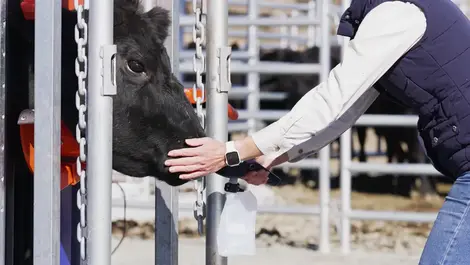
The NSW project aims to cut feedlot losses by spotting bovine respiratory disease in cattle breath before symptoms appear.
Privacy concerns are tempering the rise of AI browsing, even as 68% of Americans say they have used it instead of traditional search in six months.